
Espanyol’s academy team are leading Racing Zaragoza at half-time thanks in part to a sensational solo goal by Denis Cruz. In the concourse, the club’s head of methodology Gerard Bofill is offering an insight into the conversations happening on the bench.
“I have just talked with Nuria,” reveals Bofill. “I asked her what she has said. She has told the coach to be positive in his messaging. Maybe he was frustrated because of the actions of a player.” Nuria Rabassa Gonzalez is the sports psychologist at the academy.
Bofill, who has input of his own too, is keen to stress that “the coach has the last word” but at Espanyol the role of the psychologist is not separated from the coaching staff. She sits on the bench during games, studying body language and providing feedback.
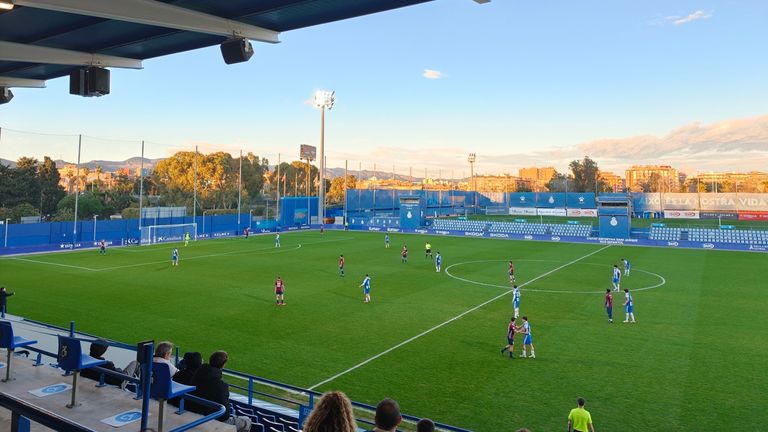
Espanyol under-19 game at Ciutat Esportiva Dani Jarque in Barcelona
“For example, maybe there is a forward who has not been having a lot of chances, is not in a good moment, is not scoring. But today, there are situations for him. She will have a specific talk with him at half-time based on what she has seen during the first half.”
It is an opportunity to remind them of the visualisations they have worked on, those positive affirmations. “The psychologist will speak for maybe just 30 seconds with the forward, giving them a mental vision that they can take into the second half,” he adds.
It is just one example of the ways in which this particular LaLiga club is trying to think differently to maximise their potential. Bofill is enthusiastic about the virtual reality glasses that they hope will allow players to learn without increasing their physical load.
He talks too about the importance of preserving the club’s identity. “We look for coaches who align with our 4-4-2 model, aggressive football, attacking down the wings. It would make no sense to look for a coach who proposed to defend with a back five.”
Being the other club in Barcelona means knowing who you are and sticking to the plan. Not so long ago there was a vision of Espanyol being a team comprised entirely of Catalan players and while that has been modified, the focus on development remains.
Michael Paul-Carres had been leading a project at the club examining the values that are most important to Espanyol. “The whole idea is to get an understanding of the identity of the club. It is a project that runs all the way through the academy,” he says.
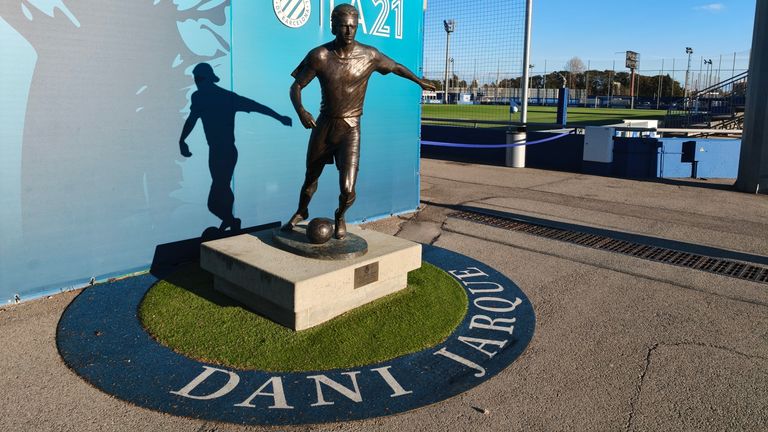
Statue of Dani Jarque at the Espanyol academy named in his honour
“We developed it through dialogue with people who have spent many, many years in the club, who have a real understanding of who we are. What features of our teams and what features of our players are most likely to give us that sustainable success?”
They are leaning into those emotional connections, fostering that sense of a family club. There is an awareness that if they offer a level of support and commitment that players are unlikely to receive elsewhere, they can help talent fulfil their potential more often.
“The big difference we emphasise is that psychological aspect,” says Paul-Carres. “The psychologists at this club are not part of the medical staff, they are part of the sporting management because we believe that if we are not well then we cannot play well.”
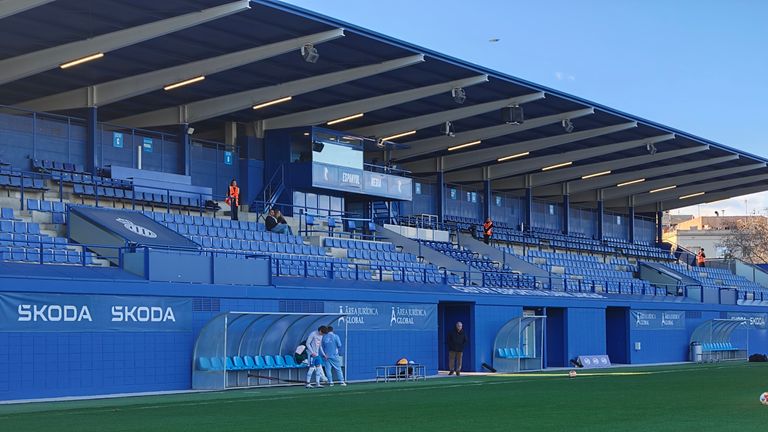
The dugouts at the academy that include a psychologist watching every game
By “analysing the communication and how that emotional management is going,” they feel they can gain an edge, that this is the future of football. “In the end, this is the great blue ocean, that ability to make a difference, and that is what we need in the end.”
If Paul-Carres is the moderniser at Espanyol, one might expect his colleague Alex Garcia to be more old school. Now 60 and a former player at the club, he did not have this level of support during his day. “There were no psychologists then,” he laughs.
“On top of the pressure I put on myself, there was the pressure from those around me,” he remembers. But that does not mean that he wants the same for this generation. “That is what we take care of.” Garcia is Espanyol’s head of families and child advocacy.
“It is not just for show. It is real. We bring families into the fold in a genuine way. Without getting to know the family, what we aim for would not be possible. We want a deep understanding of every player. With that, you can anticipate problems that might arise.
“It is important that the families know that we are all in this together. It is much easier when they are involved. They all have my number and there is no such word as ‘bothering’ in my vocabulary. If there is a problem with the child, they need to raise it.
“Not in April or May and them telling us that in November there was a problem in the locker room because someone threw a bar of soap at them. That has to be resolved immediately. We are all about intervening, supporting and solving those problems.”
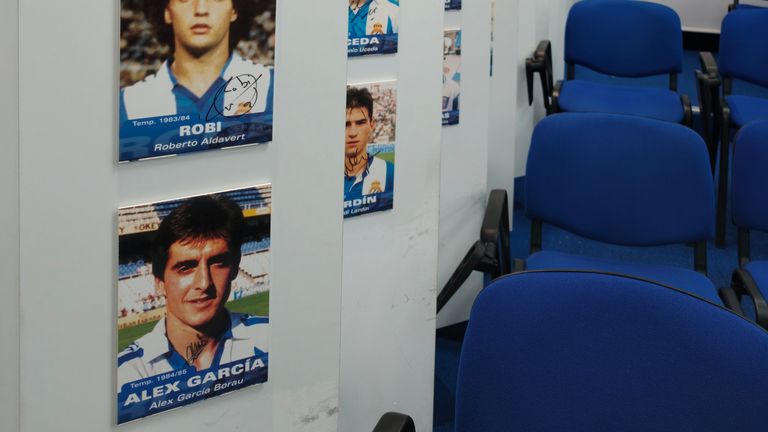
Alex Garcia is among those on the walls of Espanyol’s academy celebrating old graduates
Garcia and Paul-Carres watch 70 per cent of academy matches with family members. They have just finished the first round of meetings for 2026. “One hour with each of the 180 families,” says Garcia. “School grades, coach reports, psychologist reports.”
He will do it all again at Easter. “A lot can change in a few months.” But he enjoys it. “I have been present at all 180 meetings,” he explains. “I have to personalise it.” That, it seems, is the ethos of everything that Espanyol are trying to do within their academy.
“When we take a child from a family and we bring them here, we have to do much more than just improve their football skills. It is a huge responsibility and we approach it as such.” For him, a child’s psychological wellbeing takes precedence over their football.
How do the coaches feel about all this? Marc Xalabarder was the young coach being advised by the psychologist in that win over Racing Zaragoza and he does not doubt the value of the role. “The physical side is important. The psychological is more important.”
Xalabarder explains: “It is fundamental that the players have their heads where they should be, that they are motivated to perform. You can learn a lot if you play well, but if you do not want to play well, it is useless. Psychology influences their performance.”
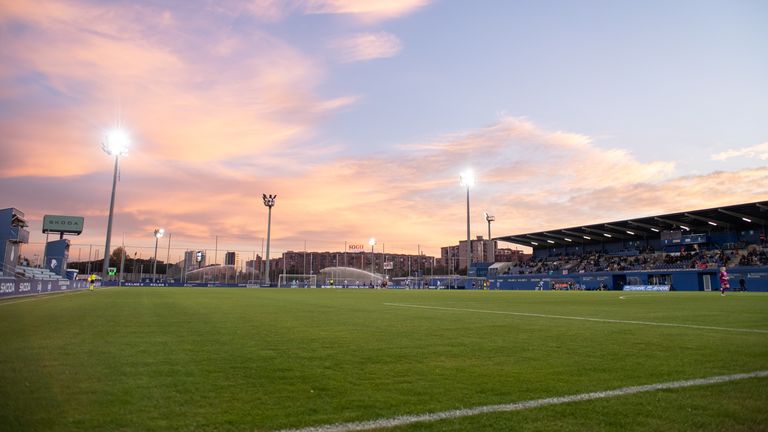
Under the lights at the Ciutat Esportiva Dani Jarque in Barcelona
Speaking to the youngsters at the academy, it is clear that they appreciate this too. Thomas Dean, a bubbly teenage defender with Chilean-American roots, says: “They talk to you a lot here. The psychological department focus on individual improvement.”
Eloi Tost, his teammate, certainly has his head screwed on. He is studying aerospace engineering and has not ruled that out as a career path if his football journey does not work. “I want to be a footballer but if it does not happen, maybe I will go to NASA!”
Either way, they will be supported. “The possibility of players not studying is not even considered,” explains Garcia. “We wait for them at the front door to ask how their exams have gone. It only takes a minute. The players know that we look at these things as well.”
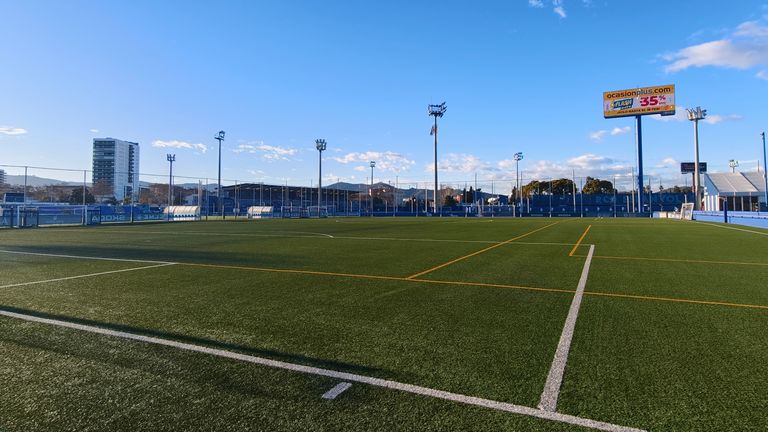
Joining Espanyol in Barcelona is an attractive proposition for young players
Whether Tost or Dean, a business management student, ever make it to Espanyol’s first team remains to be seen. But one way or the other, they will surely succeed. That is how Espanyol hope to persuade many of Catalonia’s best talents to join them in the future.
It is a region of rich potential. That can play into their hands. “Players should leave their community before 16,” says Garcia. “As a child advocate, taking a minor thousands of kilometres from home cannot end well. Every Friday, they should be home with family.”
This family club, the alternative to Barcelona’s La Masia, believe they can benefit from that. Back at the academy game, Bofill points out that they are still demanding. “Players must learn to live with stress.” But at Espanyol, the psychologists are always watching.