
Long before volleyball became the sport it is today, Don Shondell was building something that extended far beyond a college volleyball program.
As the founder of the Ball State University men’s volleyball program and the Midwest Intercollegiate Volleyball Association, Shondell became one of the sport’s leading ambassadors. But perhaps his greatest legacy wasn’t measured solely in championships or wins. It was measured in the people he taught, the opportunities he created and the coaches and leaders who carried his lessons forward.
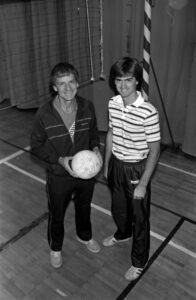
Don Shondell (left) and oldest son, Steve (right)
The Shondell family is often regarded as the “first family” of volleyball, and Don’s influence can be traced through generations of athletes and coaches.
For today’s junior volleyball leaders, his story offers an important reminder:
Great programs aren’t simply built by finding great players. They’re built by teaching, developing and believing in people.
See Potential, Not Just Experience
During many of his 38 years coaching at Ball State, Shondell didn’t have the luxury of inheriting polished volleyball players.
So he looked elsewhere.
He found athletes through cuts from other Ball State teams, intramural competitions, fraternities and even his own physical education classes. Many were talented athletes, often basketball players, but had little or no volleyball experience.
Instead of asking only, “Can this athlete play volleyball?” Shondell asked a different question:
“Does this athlete have the qualities we can develop into a volleyball player?”
Scott McCoy, who played on four consecutive Final Four teams in the early 1970s, recalled the process Shondell used to evaluate newcomers.
“He had six or seven athletic ability tests: Like throwing the medicine ball against the wall above a certain line and seeing how many times you could do that in a minute, or the 50-yard dash, or a standing jump. He would rank people and that’s how he picked who made the team.”
Lesson for Club Leaders: Identify Potential
Club Directors and Coaches don’t always have the opportunity to work with athletes who arrive fully developed.
Some athletes are late to the sport. Others are transferring from another position or another sport. Some may not stand out immediately during tryouts.
A program’s ability to identify athleticism, competitiveness, coachability, work ethic and potential can be just as important as identifying technical skill.
The question isn’t always Who is the best player today?
It can also be:
Who has the capacity to become the best player tomorrow?
Teach the Game and Keep Learning Yourself
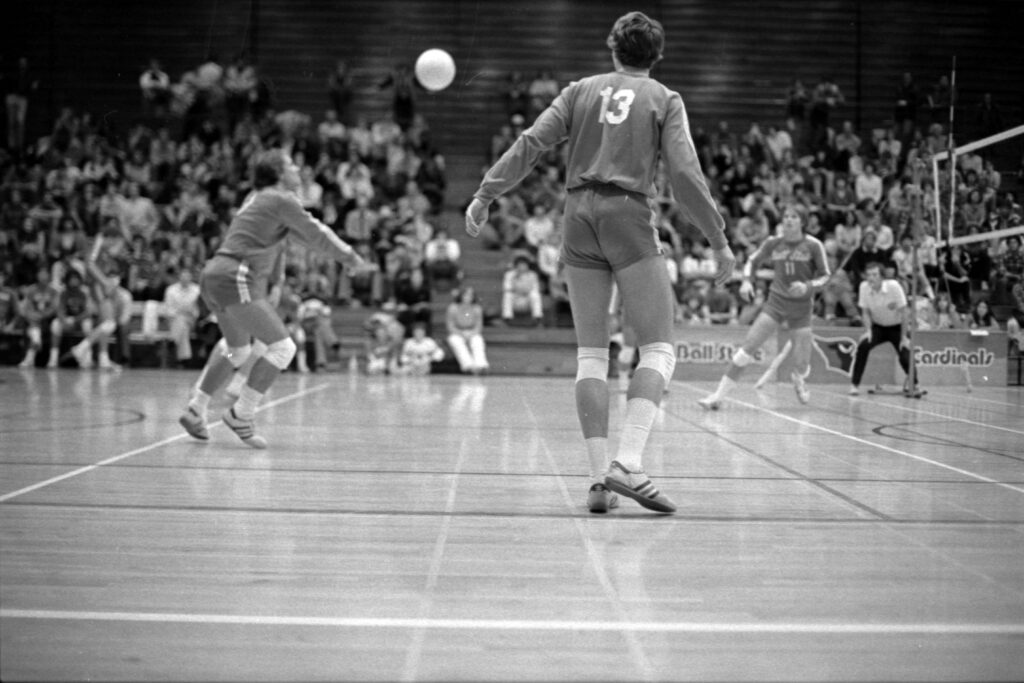
In the early days of Ball State volleyball, Shondell and his players were learning on the go.
The team traveled to middle schools and high schools to conduct clinics and demonstrations. Those visits served a dual purpose: They introduced young athletes to volleyball while simultaneously giving Ball State’s players opportunities to teach, demonstrate and refine their own understanding of the game.
That is an important distinction.
Teaching is one of the best ways to learn.
The Ball State players weren’t simply representing their program. They were becoming better volleyball players and developing skills that would eventually serve them as Coaches and leaders.
Pete Hanson, the three-time national champion men’s coach at Ohio State, captured the essence of Shondell’s philosophy when he described his former Coach as someone who
“was about providing opportunities, teaching guys and instilling a love of the game in them. Don’s calling was teaching young people the game of volleyball.”
Lesson for Coaches: Develop Teachers, Not Just Players
For junior volleyball programs, this principle can have a tremendous impact.
Give athletes opportunities to demonstrate skills. Let older players work with younger athletes. Encourage players to explain a drill or teach a skill. Create opportunities for athletes to mentor teammates.
When players understand why they’re doing something, not simply how to do it, they become better students of the game.
And Coaches become better teachers.
Create a Culture Where Players Want to Learn
Shondell’s players responded to his passion for the sport.
Many were introduced to volleyball relatively late, but they became invested in learning. Ernie Gilbert, one of several players who attended Kellogg Community College before transferring to Ball State, helped originate fall practice at Ball State in the early 1970s.
Others found ways to continue developing during the summer, whether through club volleyball or informal games in local parks.
The lesson is bigger than simply creating more practice opportunities.
When athletes become invested in their own development, the Coach no longer has to create every opportunity.
The athletes begin creating them for themselves.
Lesson for Club Directors: Build Ownership
A strong club culture should encourage athletes to ask:
- How can I get better?
- Where can I get more touches?
- What can I learn outside of practice?
- How can I help my teammates improve?
- What can I do when my Coach isn’t standing next to me?
The goal isn’t to make athletes dependent on their Coaches for development.
It’s to make them hungry to develop.
The Ripple Effect of a Great Coach
Perhaps the most powerful part of Shondell’s legacy is what happened after his players left Ball State.
Many former players went on to Coach at the club, high school and collegiate levels. The lessons they learned didn’t stay with them. They spread throughout the sport.
That ripple effect is one of the greatest measures of a Coach’s impact.
A Coach doesn’t only influence the athletes standing in the gym today.
A Coach can influence the athletes those players eventually Coach.
And the Coaches those athletes eventually become can influence hundreds or even thousands more.
That kind of impact cannot be captured in a win-loss record.
One Opportunity Can Change Everything
The story of Munciana offers perhaps the clearest example of how one simple opportunity can create an extraordinary legacy.
When Steve Shondell was a freshman at Ball State, the Amateur Athletic Union announced its first national tournament for boys’ and girls’ volleyball teams.
The tournament director contacted Don, who asked Steve if he was interested in putting together a team.
Steve agreed.
As a senior at Muncie North Side, he had previously coached a softball team. He assembled a group of girls from North Side, coached them and took them to the national tournament.
They finished seventh out of 14 teams.
That was the beginning of Munciana.
What followed was remarkable. Munciana grew into one of the most successful junior volleyball clubs in the country, eventually producing more than 40 national championships and becoming a training ground for countless Coaches and athletes.
Steve, who went on to win 21 state and four national titles coaching Muncie Burris girls’ teams, described Munciana as:
“probably the most significant thing I have done in my lifetime, and it is all because Dad said something to me about that first national tourney.”
Lesson for Leaders: Don’t Underestimate the Next Opportunity
It’s easy for Coaches and Club Directors to focus on the next tournament, next practice or next season.
But sometimes the most important thing you do is simply open a door.
Invite someone into the gym.
Give an athlete a leadership opportunity.
Encourage a young Coach.
Allow a player to try something new.
Introduce two people who might benefit from knowing one another.
You may never know which seemingly small opportunity becomes the foundation for something much bigger.
Build a Program That Outlives You
Don Shondell’s legacy isn’t simply that he founded Ball State men’s volleyball.
It’s that he helped create people who continued building volleyball after they left his program.
That’s perhaps the most important lesson for today’s Club Directors and Coaches.
Your ultimate measure of success isn’t just what your program accomplishes while you’re leading it. It’s what continues because you led it.
Did your athletes develop a love for the game?
Did they become better teammates?
Did they learn how to lead?
Did they become Coaches?
Did they return to the gym to help the next generation?
Did they leave your program with the desire to give back?
If the answer is yes, your impact is much larger than a season’s record.
The Legacy of a Teacher
Don Shondell’s story is a reminder that volleyball development has never been solely about perfect technique, elite recruiting or winning championships.
It is about people.
Find potential.
Teach relentlessly.
Create opportunities.
Encourage curiosity.
Build relationships.
Give athletes ownership of their development.
And, perhaps most importantly, leave the sport better than you found it.
Pete Hanson summarized Shondell’s calling simply: “teaching young people the game of volleyball.”
That may be the most enduring lesson of all.
For today’s Club Directors, head Coaches and leaders, the challenge is not simply to build the next great team.
Build the next generation of athletes, Coaches, teachers and leaders who will build the game after you.
Information and quotes in this feature are drawn from Why Not Us? Ball State University Men’s Volleyball Alumni Unite Around Ultimate Goal by Tom Schuman. Learn more about the book and purchase a copy at www.tomschumanbooks.com.