

The Odyssey premiered globally in London on July 6, 2026, before opening in theaters worldwide on July 17, 2026. Directed by Christopher Nolan, whose filmography includes acclaimed titles such as The Dark Knight trilogy, Inception, Interstellar, Dunkirk, and Oppenheimer, the historical epic reimagines Homer’s classic poem for modern audiences.
The film stars Matt Damon as Odysseus alongside Anne Hathaway, Tom Holland, Zendaya, Charlize Theron, Robert Pattinson, Samantha Morton, Elliot Page, and Benny Safdie. It also marks a technical milestone as the first commercial feature-length blockbuster shot entirely on 70mm IMAX film cameras.
While preserving the broad framework of Homer’s epic, The Odyssey introduces several narrative and thematic changes, reshaping key characters, major events, and the story’s conclusion.
What is Christopher Nolan’s The Odyssey about?
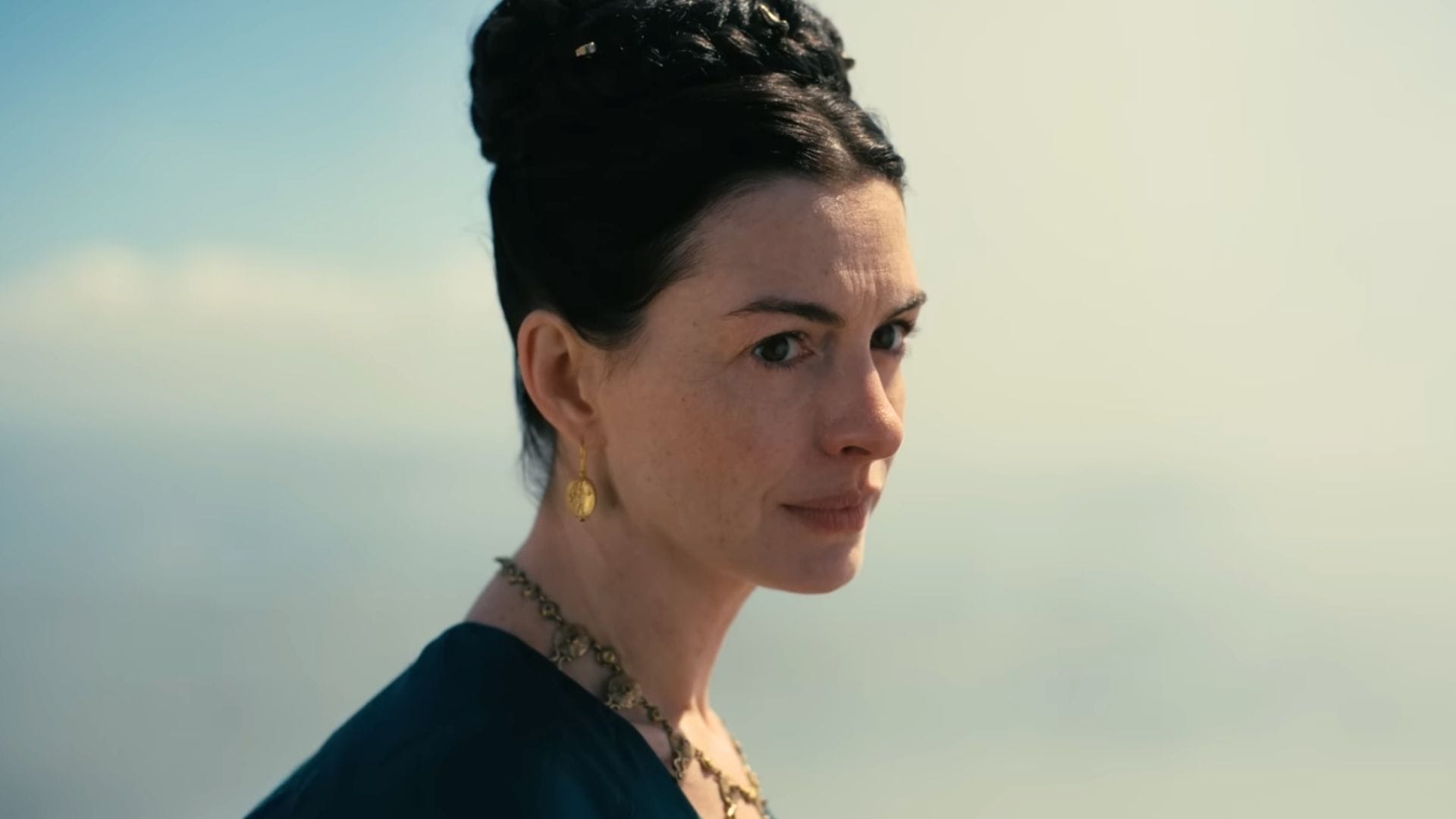
In Christopher Nolan’s The Odyssey, Matt Damon plays the role of Odysseus, who, following the Trojan War, faces a number of perilous challenges on land and sea on his way back to Ithaca. Meetings with Circe, Calypso, the Cyclops, and the suitors waiting in Ithaca are all part of the story, which follows the general outline of Homer’s epic.
The film focuses more on the mental toll of war, though, as we see Odysseus battle guilt over the Trojan Horse’s role in Troy’s downfall. Additionally, Nolan simplifies a number of legendary tales, lessens the gods’ active role, and adds new characters and plotlines that aren’t in Homer’s poem.
How does Christopher Nolan’s The Odyssey differ from Homer’s epic?
One of the most fundamental differences in The Odyssey is the way the Greek gods are depicted. Throughout Homer’s epic, gods like Athena, Zeus, Poseidon, and Hermes constantly interfere with human events, either helping Odysseus on his trip or working against him. Christopher Nolan brings that divine engagement down to earth a lot more. Zeus himself is never seen and Poseidon is an unseen spirit whose influence is felt in storms and calamity rather than in the outward appearance.
The only god who has any sort of personal relationship with Odysseus is Athena, played by Zendaya, though the movie leaves it open to interpretation that her visits may be more expressions of his conscience or remorse than actual gods.
The film also re-imagines some of the poem’s most famous episodes. The Cyclops sequence departs from Odysseus’ ingenious ruse and emphasizes a more physical fight for survival, ending with Odysseus firing an arrow through the eye of the blinded Cyclops as he makes his escape.
The Circe story is no less truncated. Circe does not become Odysseus’ lover or host his men for a year as pigs; instead, she has a brief but darker encounter with Odysseus before he moves on. Calypso is also given a distinct role, the lotus flowers erasing the memory and identity of Odysseus rather than representing amorous seduction during his years on Ogygia.
Nolan also re-imagines the Underworld sequence by focusing on the personal guilt of Odysseus, rather than on his encounters with the many figures of Greek mythology. Elliot Page portrays Sinon, a character from Virgil’s Aeneid whom Christopher Nolan adds to the film, as Sinon does not appear in Homer’s Odyssey. Including him forces Odysseus to face the human cost of the Trojan Horse plan and the sacrifices of war.
These changes combine to move the film towards a more grounded exploration of memory, trauma, and the enduring consequences of war, yet retaining the basic framework of Homer’s masterpiece.
Why does Christopher Nolan completely change the ending of The Odyssey?
There are numerous differences in the finale of The Odyssey as compared to Homer’s epic. In the latter, Odysseus comes back to Ithaca as a beggar, is reunited with his son Telemachus, kills the suitors of Penelope, and takes control of the kingdom again. Then Athena steps in to prevent any bloodshed and restore order in the kingdom.
In Christopher Nolan’s movie version, however, Odysseus’ path remains more or less the same, with one important difference: he does not become the king again. Instead, he and Penelope decide to move away to pay tribute to the fallen soldiers of the Trojan War and let Telemachus take over the kingdom.
The movie also includes the plot about the “people from the sea,” which is an allusion to some theories regarding the Late Bronze Age collapse. In Homer’s epic, however, there was no mention of such people, since the focus was put on Odysseus’ personal destiny rather than history of that period.
Another significant change in the ending of the film is in the fact that Odysseus and Penelope become reunited thanks to the golden Athena pin, while in Homer’s story, Penelope reveals her husband by mentioning their immovable marriage bed.
Where to watch The Odyssey
The Odyssey has been showing in theaters worldwide since its theatrical release on July 17, 2026. The movie can be seen in both standard and premium formats along with IMAX version. Movie buffs eager to watch Nolan’s interpretation of Homer’s classic story can look up the local theater schedule for show timings.
Edited by Bea Melisse Ibañez