

A 52-year-old Pennsylvania man has been charged after allegedly passing off a retired NASCAR truck as a street-legal vehicle, according to state police. Yancy Cupp was arraigned in Cumberland County after investigators claimed the race-used truck had been fraudulently modified and registered using false documents, despite not meeting legal road requirements.
According to troopers, the truck was advertised online as a street-legal 1999 Chevrolet S10, with claims that it had been converted for road use by its previous racing owner. However, that claim was denied, and investigators later determined the vehicle did not meet the standards required for public road use.
Thanks for the submission!
“A physical examination of the vehicle by investigators confirmed it was not street legal,” troopers said via Fox8.
Authorities allege that Yancy Cupp installed a fraudulent Vehicle Identification Number (VIN) taken from another vehicle to secure a title for the NASCAR truck, which originally had no VIN or registration history. He now faces multiple charges, including felony fraud, theft by deception, forgery, tampering with public records, and unlawful alteration of a VIN, and others tied to deceptive business practices.
The truck was raced by Norm Benning at Bristol in 2023 and retains much of its competition specification despite customizations on lights and license plates. It was sold at the Carlisle Auto Auction for $10,000 after being listed on eBay as a street-legal 1999 Chevrolet S10. Cupp is now due to appear in court on August 10.
How can NASCAR trucks be made street legal?
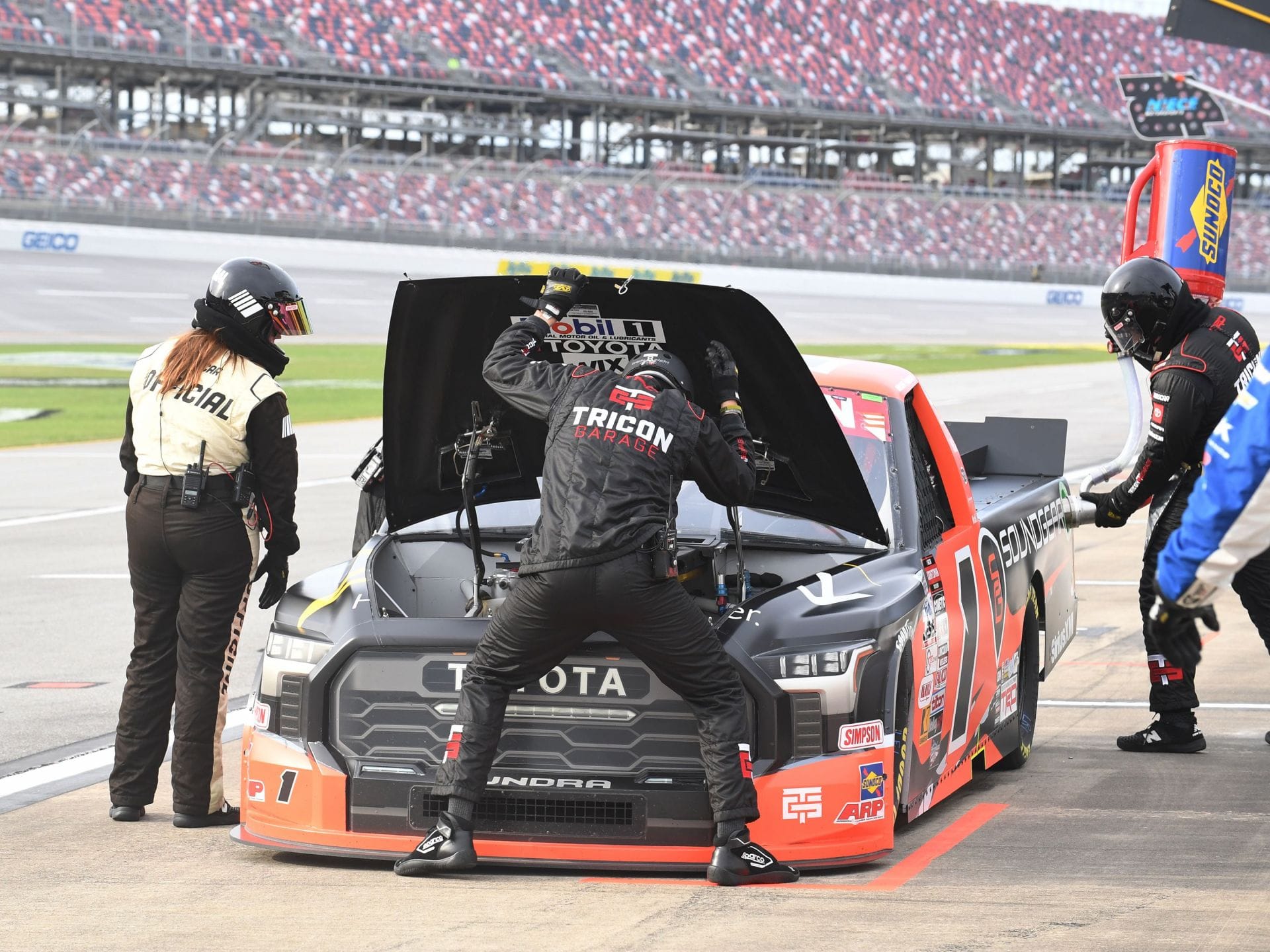
The truck at the center of the case traces back to Norm Benning Racing. Its most recent competitive appearances came in the 2025 NASCAR Truck Series, where the No. 6 entry ran a 12-race schedule and opened the year with a 16th-place finish at Daytona.
Race vehicles like these are not built for public roads. They are designed strictly for competition, meaning they lack basic road-use components and legal certification. To convert a NASCAR truck into a street-legal vehicle, extensive modifications are required.
These include installing functional headlights, brake lights, and turn signals, along with mirrors, a horn, windshield wipers, and emissions-compliant systems. The vehicle must also pass safety inspections and be assigned a legitimate VIN through proper channels, as race chassis typically only carry internal identification numbers.
In this case, investigators allege those steps were not properly followed. Instead of undergoing a verified conversion process, the truck was reportedly given a false VIN and misrepresented as road-ready.
Edited by Anurup Chakraborty